Art of Ukiyoe
Fine Japanese Prints
Masterpieces and rarities, from early Ukiyoe to Shin Hanga, all guaranteed original.
Our Newest
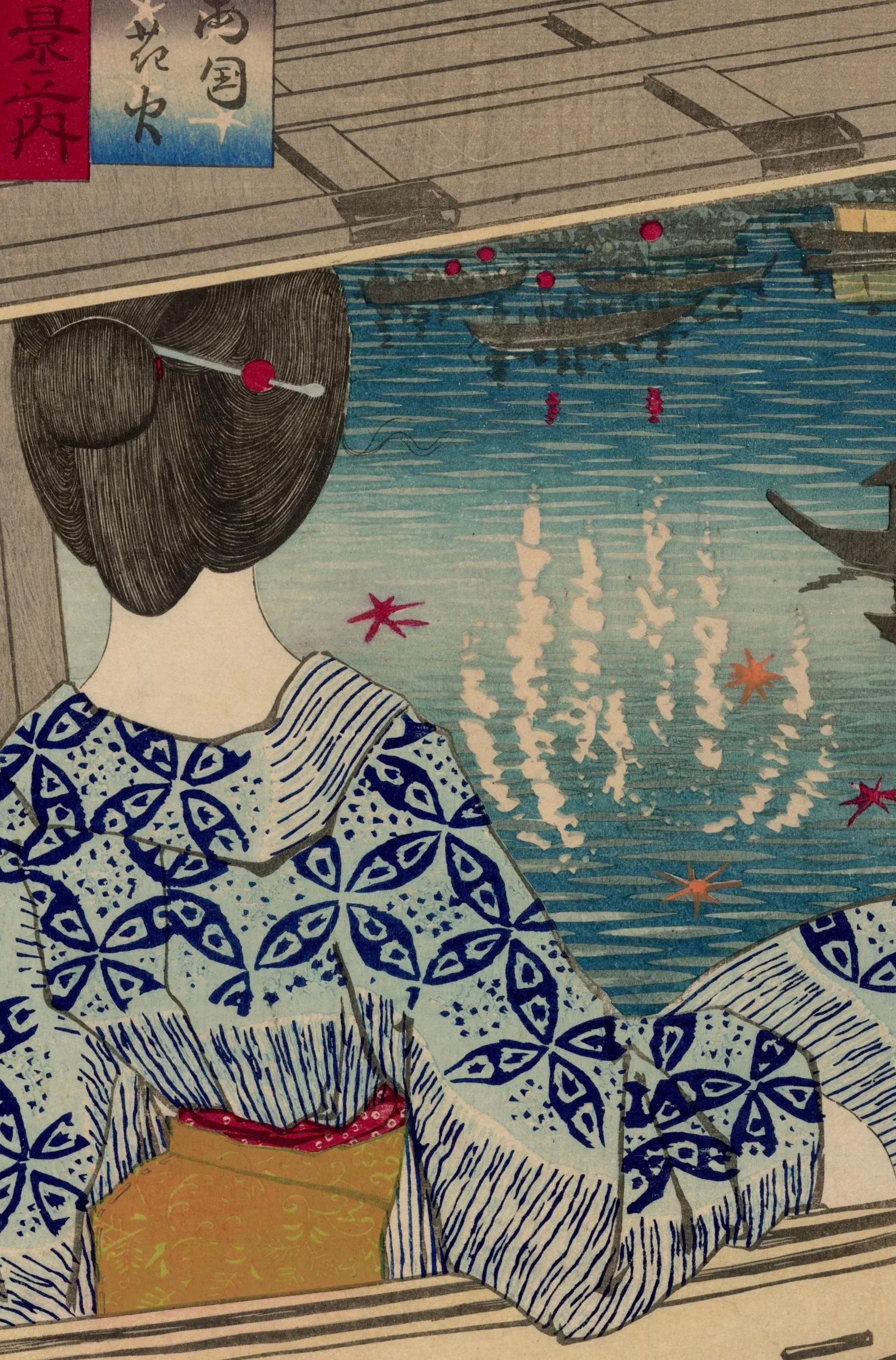
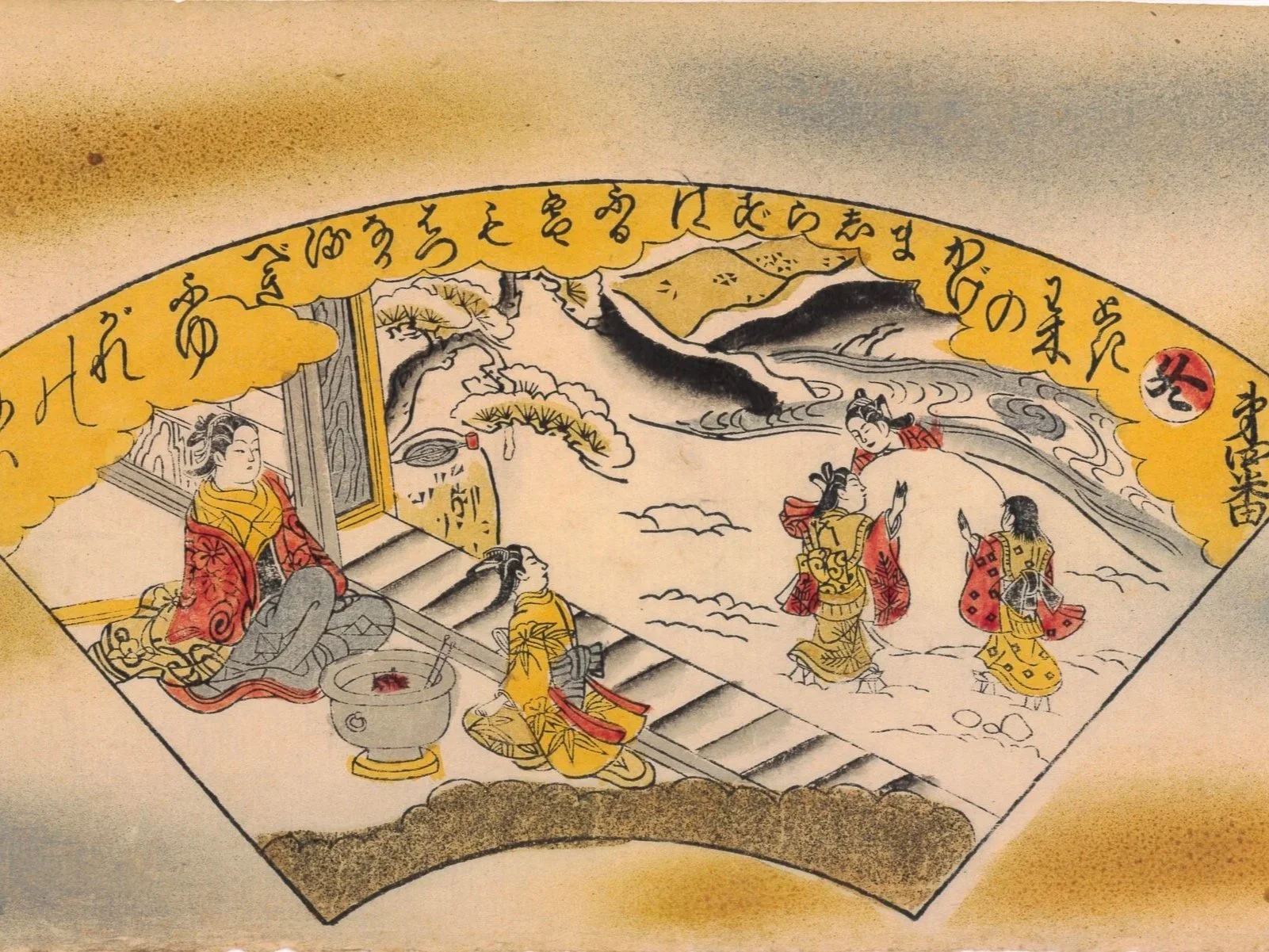
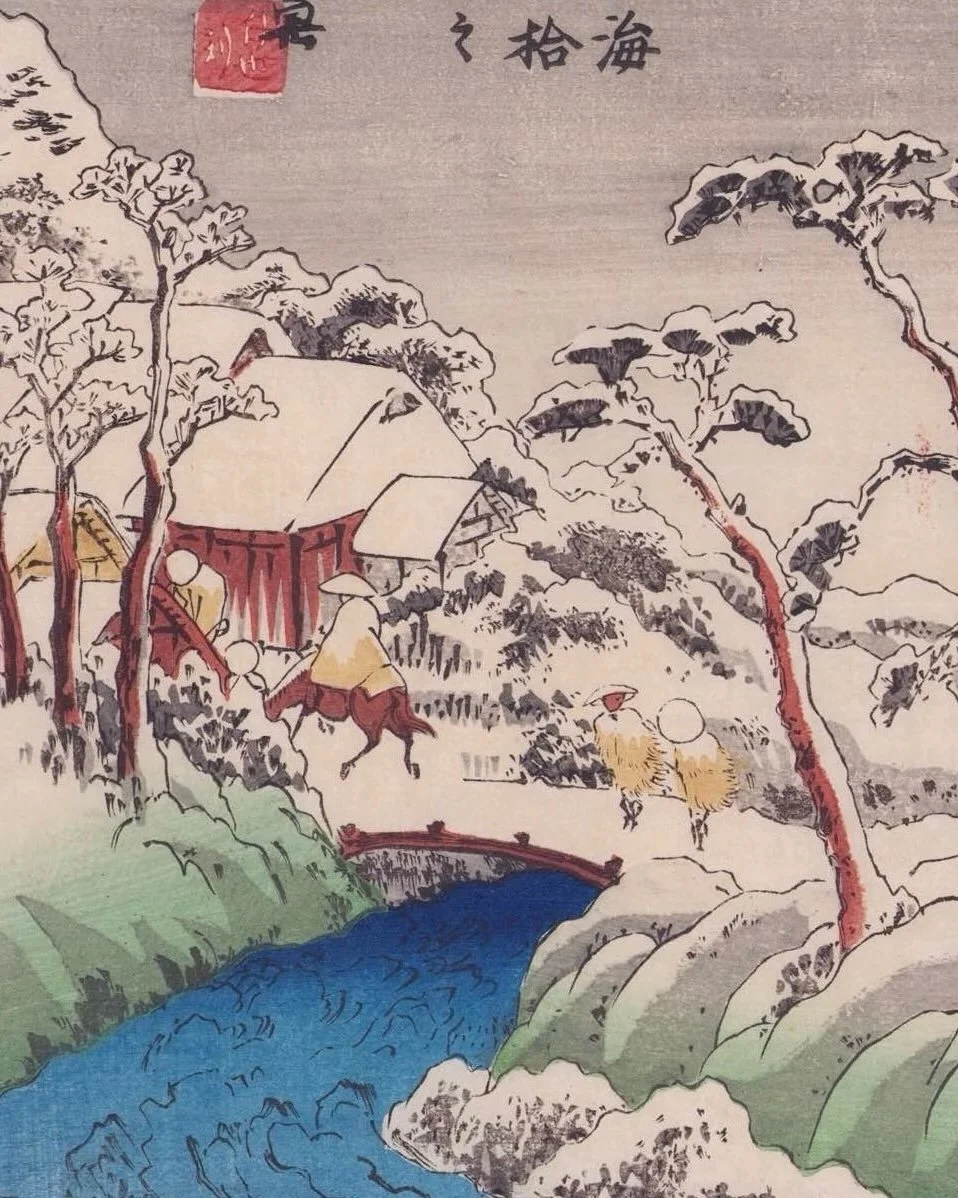
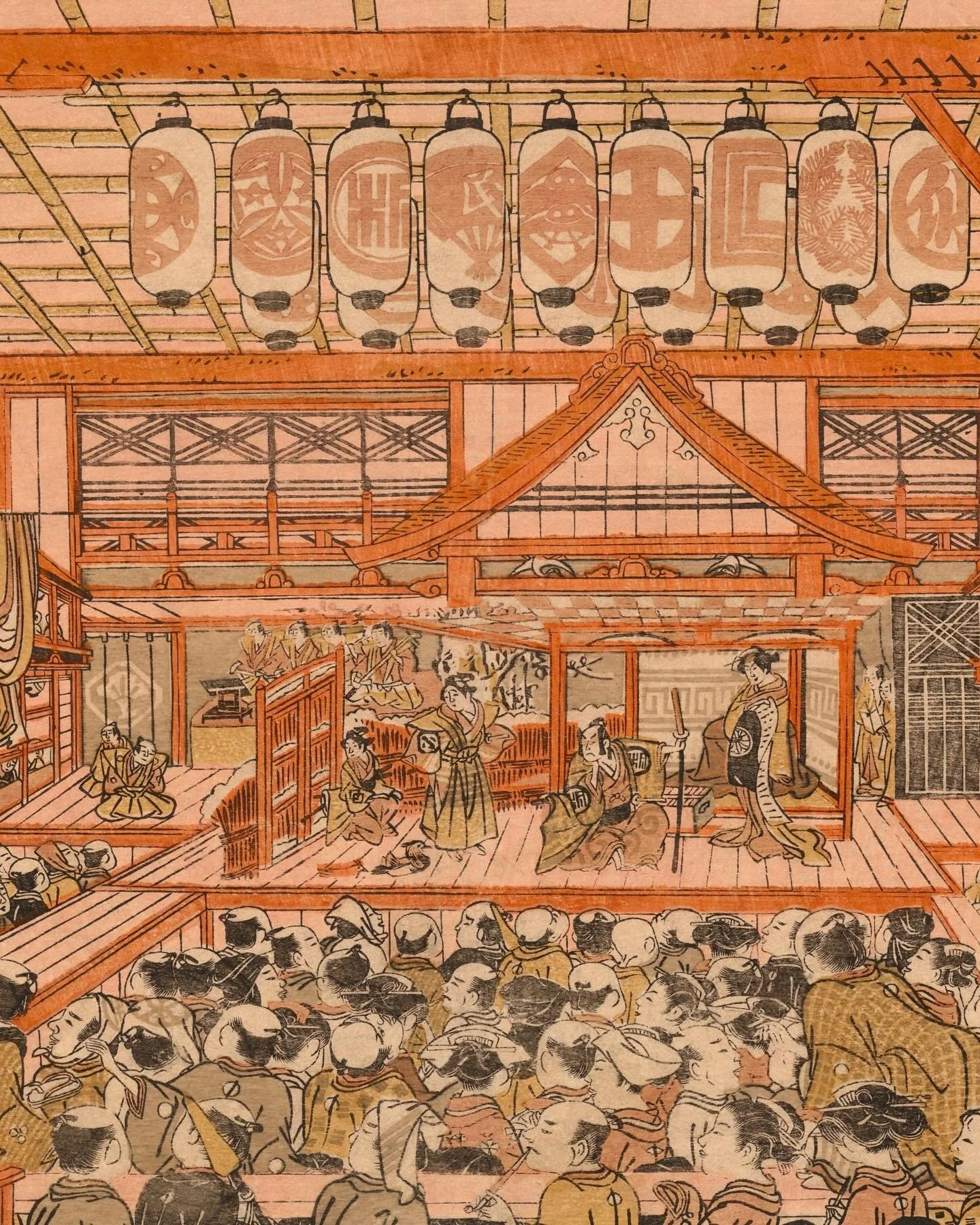
Okumura Toshinobu
Beni-e: Winter: The Snowy Garden, from the series of Pleasures of the Four Seasons (1725-35)
奥村利信
红绘: 四季之乐 雪之庭 冬 (1725-35年)
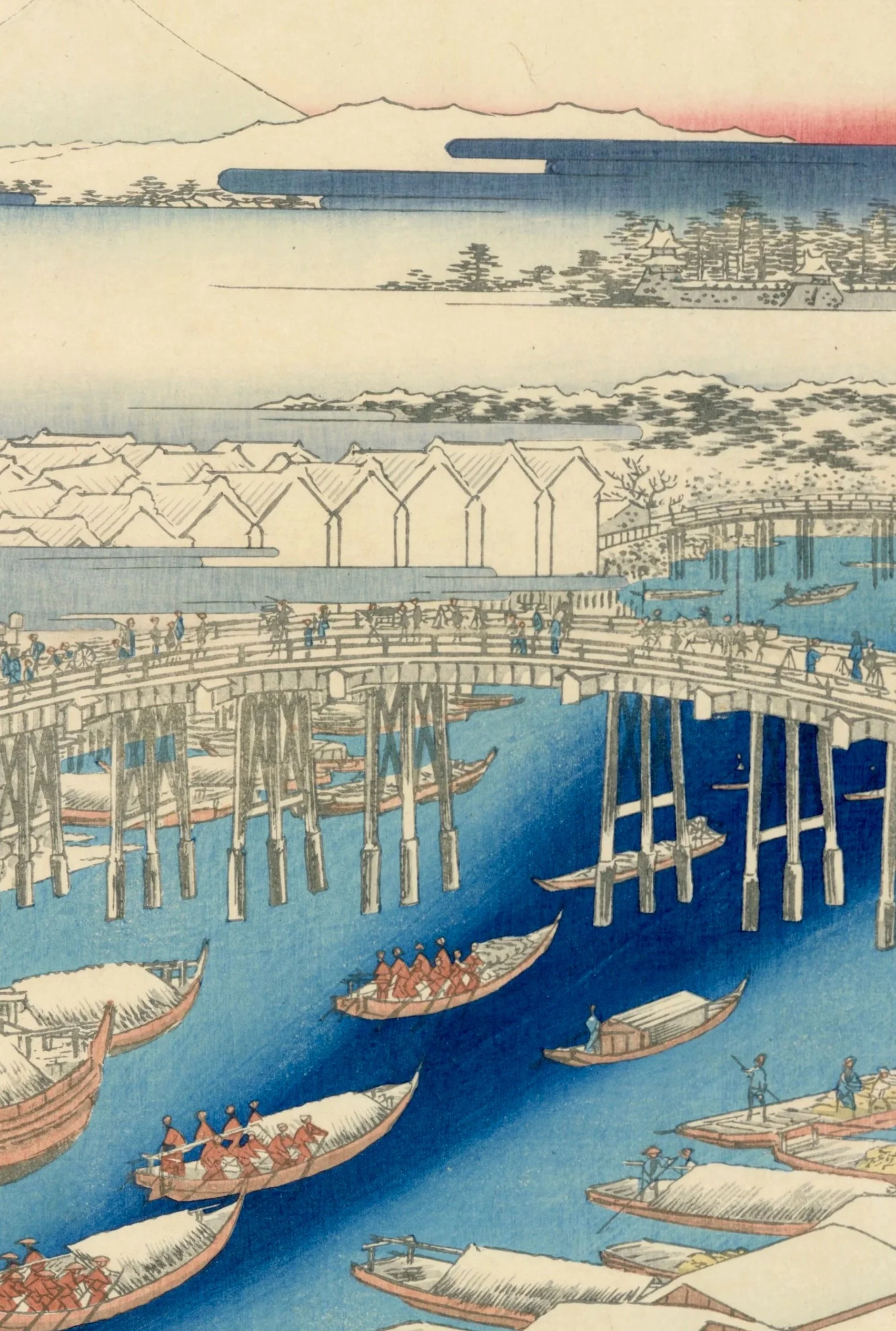
Utagawa Hiroshige (1797-1858)
Clearing after Snow, from the series of 100 Famous Views of Edo
Featured Print:
A Snowbound Vision Of a Glorious Edo Dawn
New Year, new day, new featured print.
Here we are, in the sky like a bird, looking down on the magnificent panorama of Edo in 1856. The day is dawning bright and cold and clear, freshly fallen snow still blanketing the rooftops and trees.
This is “Nihonbashi: Clearing After Snow,” the opening design from Hiroshige’s late-career masterpiece, “100 Famous Views of Edo.” It marks the auspicious start of a bold new year.
Nihonbashi, the bridge from which all distances in Edo-era Japan were measured, takes center stage. This is a view the master embraced dozens, perhaps hundreds of times, whether in total or in just a detail. Here we have it all – the busy fish market in the foreground, with dealers hawking giant tunas; the icy river with its barges and boats; the distant storehouses, their sizes exaggerated; the keep of the royal palace and, of course, the snow-covered cone of Mount Fuji, its size also increased for effect.
You could say that Hiroshige wrapped all of his greatest hits into this one magnificent print.
But there’s more.
This series was published by Sakanaya Eikichi. This example is a so-called “deluxe” version, with shaded bokashi in the title cartouche and extraordinarily fine printing. It’s printed on unusually heavy paper.
Most scholars argue that the “deluxe” state is, indeed, the first state. This follows the logic of the production arc of most Ukiyoe: the printing of the first examples tended to be of high quality, but that quality diminished as more and more prints were run off. The designs also became more simplified as production continued, with fewer color blocks, for example, especially as they wore out. Jim Dwinger, in “Hiroshige: Nature and the City,” (Ludion; 2024); and Amy G. Poster in the catalogue of the Brooklyn Museum’s famous collection of this series, both subscribe to this point of view.
But at least one expert colleague of mine feels differently, arguing that the “deluxe” version came after the first impressions, and was published because the first-round sold so well. This expert likens it to an elaborate box set of CDs, with many new or remastered tracks added as a bonus to entice those who had already purchased the release earlier. (Ok – I’m dating myself a little here.)
-
As evidence, this expert describes seeing an entire bound version of the deluxe series that included a posthumous portrait of Hiroshige. How could the deluxe version be first, the argument goes, if the artist was dead already?
Perhaps we will never know.
This series is also famous for juxtaposing foreground images with distant and famous views, such as in this Sumida River view that includes a kiln and smoke plume front and center.
But the Nihonbashi print does not include that device. Rather, Hiroshige uses the upright tate-e format to create distance from the bustling foreground to the serene background. Perhaps he had not yet discovered the full power of the bold zoom-in foreground approach.
But this print has something else, and it’s one reason I chose it as my last featured print of 2025 and my first of 2026. But you have to look closely.
Very, very, very, very closely.
A horse.
Since 2026 is the year of the horse, I couldn’t resist.
Do you see the horse? It’s about one-third of the way across the span, ridden by a samurai, crossing from right to left. It’s the only horse in the print.
Indeed, in Edo times, horses were relatively rare and mostly for the elite. That’s why the vast majority of travelers on the Tokaido (which, by the way, started at Nihonbashi) are walking.
So here we have a horse. And a wonderful curving bridge. And a fresh snowfall. And a brand new day. And a brand new year.
Sharon
Please mail, phone, Wechat or WhatsApp me. I'm happy to answer any questions. I’m also happy to send additional photographs.
This is only a limited selection of our prints.
To see more, please contact me.
如果您有兴趣购买版画,请通过邮件、电话、微信或WhatsApp与我联系,我将非常乐意回答任何相关品相问题。
本网站仅展示我部分藏品,如想欣赏更多画作,请与我联系。
How to Purchase
Learn more about payment and shipping, please click Here
Follow Us